

Cartagena - Our 7-day ticket to paradise

When most people plan a trip to Colombia, they feel the pressure to "see it all"- bouncing from the coffee farms of Salento to the bustling valley of Medellín. But for our recent seven-day getaway, we decided to break the mold. We parked our suitcases in Cartagena de Indias and didn't leave the city limits for a single second.
It was the best travel decision we’ve ever made.
By dedicating an entire week to just one city, we were able to move past the "tourist checklist" and truly sink into the rhythm of the Caribbean. We traded hectic airport transfers for slow mornings sipping colombian coffee on our balcony, and rushed sightseeing for sunset walks along the 400-year-old stone walls. We discovered that Cartagena isn’t just a stopover; it’s a vibrant, humid, salsa-filled world that rewards those who take the time to linger.
In this guide, I’m sharing everything we learned during our deep dive into the "Jewel of the Indies," including where to stay and eat, what to see and the best time to visit.
Got a question about this trip that you need answered quickly? DM me on Instagram @SolaraStills and I’ll be happy to help! I only accept DMs from followers, so hit the follow button before sending.
History
Before we start, a little history lesson about Cartagena:
The Golden Beginnings (1533)
Cartagena de Indias was founded in 1533 by the Spanish commander Pedro de Heredia. Before his arrival, the area was inhabited by the indigenous Zenú people, whose master craftsmanship in gold jewelry unwittingly made the city a target. Because the bay provided a perfect natural harbor, it quickly became the primary exit point for South American silver and gold bound for Spain, and the primary entry point for enslaved people from Africa.
A City Under Siege
With all that treasure flowing through the port, Cartagena became the ultimate "pirate's bounty." Throughout the 16th and 17th centuries, the city was repeatedly attacked by legendary buccaneers, most notably Sir Francis Drake in 1586, who held the city for ransom and burned much of it to the ground.
Exasperated, the Spanish Crown poured a fortune into turning the city into an "impregnable" fortress. Over 200 years, they constructed:
Las Murallas: The 11 kilometers of thick stone walls that still encircle the Old City.
Castillo de San Felipe de Barajas: Often called the greatest fortress ever built by the Spanish in the Americas.
"La Heroica" & Independence
Cartagena’s nickname, La Heroica (The Heroic City), was earned during the struggle for independence. On November 11, 1811, it became the first city in Colombia to declare absolute independence from Spain.
This defiance led to a brutal 102-day siege by Spanish forces in 1815. Though the city suffered immensely from famine and disease, its spirit never broke. It was eventually liberated for good in 1821 by Simón Bolívar’s forces.
Modern-Day Renaissance
For much of the 20th century, Cartagena was a quiet port, but its architectural preservation eventually caught the world's eye. In 1984, the historic center and its fortifications were named a UNESCO World Heritage Site. Today, the city is a melting pot where Spanish colonial architecture, African rhythms (like Champeta), and Caribbean vibes live together behind those same historic walls.
Best Time To Visit
While Cartagena is a year-round tropical destination, our Thanksgiving visit hit the perfect "shoulder season" sweet spot. Late November offers a unique window where the heavy tropical rains of October begin to taper off, giving way to the cooling trade winds and clearer skies of the dry season (December–April). By visiting during this time, we enjoyed the city's vibrant pre-holiday energy and festive independence celebrations without the suffocating crowds and peak-season price hikes that arrive in late December.
Whether you’re looking for the guaranteed sunshine of January and February or the budget-friendly "slow travel" vibe of the slightly wetter months like May through October, the city’s consistent warmth, which is usually around 86°F, ensures that it is always "beach weather," provided you have a pocket umbrella for those brief, dramatic Caribbean afternoon showers.
The colorful doors of Cartagena
Safety
One of the most common questions people ask about Colombia is, "Is it safe?" Based on our experience, the answer with respect to Cartagena is a resounding yes. We spent seven nights strolling through the cobblestone streets of the Walled City and the lively alleys of Getsemaní, often late at night, and felt perfectly at ease. The tourist center is remarkably well-patrolled, and the sheer number of families, couples, and locals out enjoying the humid Caribbean evenings creates a communal atmosphere that feels very secure. While we practiced basic "travel smarts", like leaving expensive jewelry in the hotel safe and using a bit of discretion with our phones on quieter corners, we found that Cartagena is not just a place to visit, but a place where you can truly relax and wander.
Cartagena at night
Visa and Currency
Getting into Cartagena as a US citizen is surprisingly straightforward, which perfectly suits a stress-free, week-long escape. You don’t need a pre-departure visa for stays under 90 days; instead, you’ll receive a tourist stamp in your passport upon arrival at Rafael Núñez International Airport (CTG). Just make sure that you've completed the Check-Mig digital form before you land.
When it comes to spending, the local currency is the Colombian Peso (COP). We found that using ATMs, usually offered the most competitive exchange rates. Many boutique hotels and upscale restaurants in the historic center accept major credit cards, but you’ll definitely want cash for the charming street vendors selling arepas de huevo or for tipping the talented street performers in Getsemaní.
Getting Around
While the historic center of Cartagena is incredibly walkable, we found that getting around the rest of the city was a breeze thanks to ride-sharing apps. We primarily used Uber and felt completely safe and comfortable during every trip, whether we were heading to a dinner in Getsemaní or returning to our Airbnb in Marbella. Using the app removed the stress of language barriers and the need to negotiate fares, as the price is set upfront and the driver’s details are tracked. For us, it was the most reliable and affordable way to navigate the city, especially after dark, with most rides within the main tourist zones costing only a few US dollars.
Where To Stay
While many travelers reflexively book hotels inside the busy Walled City, we found our slice of paradise just a few minutes up the coast in Marbella. We stayed in a charming oceanfront Airbnb overlooking Playa Marbella, and it completely changed the "vibe" of our week.
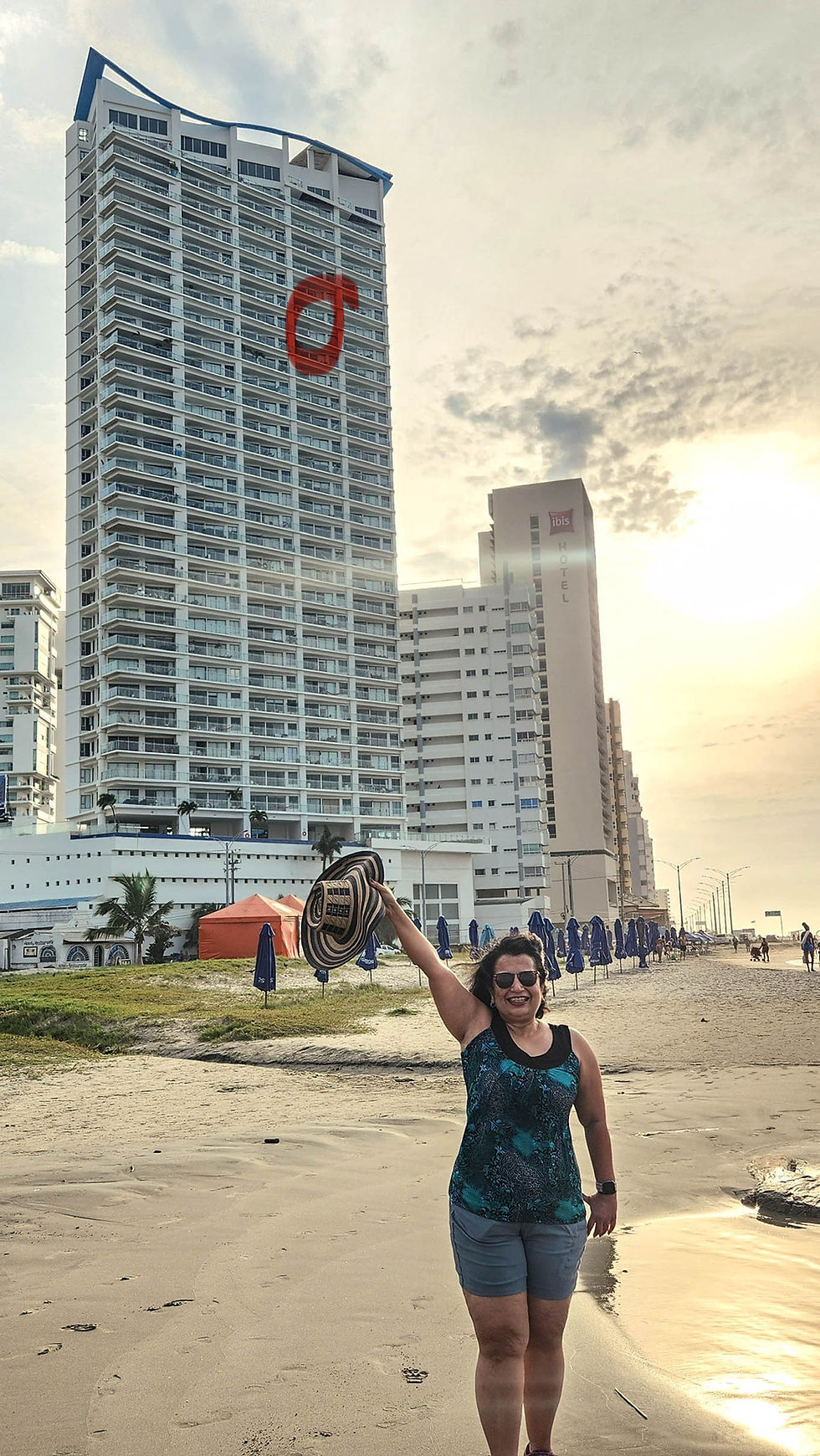
Staying outside the historic center gave us the best of both worlds: the tranquility of waking up to the sound of crashing waves and the local flavor of a real neighborhood, all while being just a $3 Uber ride from the Walled City, and a $5 Uber ride from the airport. Watching the sunset over the Caribbean from our own private balcony was a daily ritual that surpassed any rooftop bar experience. Unlike the crowded, high-energy shores of Bocagrande, Playa Marbella feels much more laid-back. It’s where you’ll see locals jogging at sunrise or families gathering for a weekend dip. By stepping just 10 minutes away from the tourist hub, we were able to afford a spacious, modern apartment with a full kitchen, at a fraction of the price of a cramped boutique hotel room downtown. While we loved the salsa-filled energy of Getsemaní, being able to retreat to a quiet residential area at night ensured we actually felt rested by the end of our seven days.
Infinity pool at our AirBnB overlooking the ocean
TIP: If you choose a rental in Marbella, look for one of the newer high-rise buildings. Many offer 24/7 security and rooftop pools that provide a stunning 360-degree view of both the ocean and the historic city skyline.

What To See
The Walled City
The walled city of Cartagena is the kind of place that pulls you in with its color and keeps you wandering with its charm. Within these 16th‑century fortifications built by the Spanish to defend against pirates, you’ll find cobblestone streets lined with bougainvillea‑covered balconies, lively plazas, and beautifully preserved colonial architecture. Must‑see spots include :
Plaza Santo Domingo, known for its open‑air cafés and the famous Botero sculpture Gertrudis
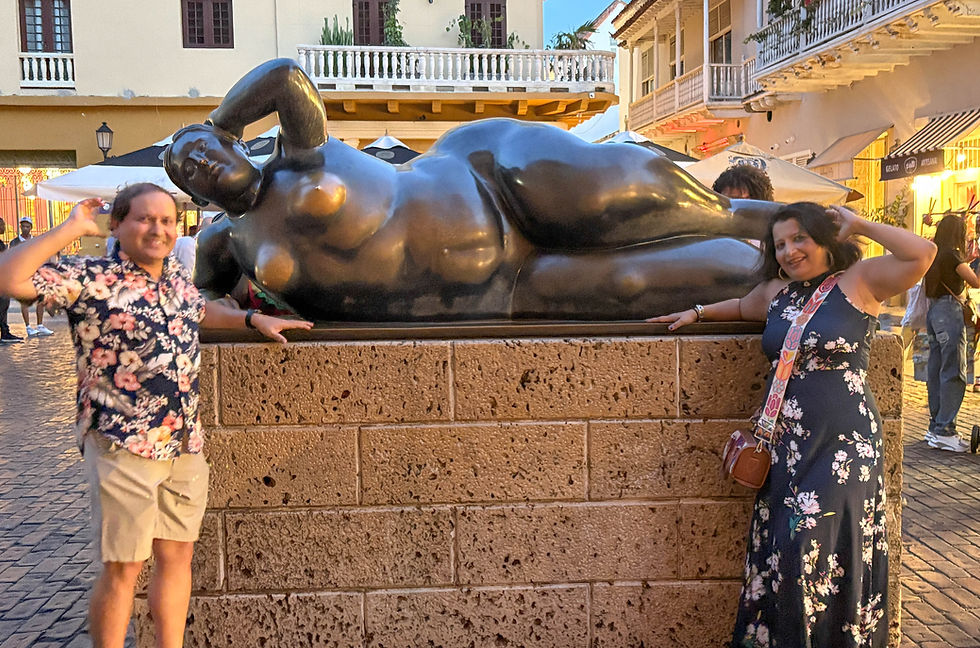
Plaza Bolívar, once the city’s main square and now a shady retreat surrounded by museums and historic buildings.

The Clock Tower Gate, built in the 1700s, still stands as the grand entrance to the old city and one of Cartagena’s most photographed landmarks.

As the day cools, head up to the top of the walls for a sunset walk, one of the most magical experiences in Cartagena. The ramparts were originally constructed to protect the city from invasions, but today they offer sweeping views of the Caribbean Sea on one side and the glowing rooftops of the old town on the other.


For souvenirs, browse the artisan stalls at Las Bóvedas, a series of former military storage vaults built in the late 1700s that now house colorful shops selling woven bags, paintings, jewelry, and handicrafts.
Shops at Las Bovedas

And don’t skip the street food: arepas de huevo, fresh fruit cups, and cheese‑filled carimañolas are easy, delicious, and everywhere.

To truly understand the stories behind the beauty, join a walking tour. And if you can, book one with Edgar from Free Tours Cartagena. He’s known for blending history, humor, and local insight in a way that makes the walled city feel alive, from pirate legends to architectural secrets to the cultural roots of each neighborhood. A tour with Edgar is the perfect way to kick off a 7‑day Cartagena itinerary, giving you context, confidence, and a deeper appreciation for everything you’ll explore throughout the week.
Getsemani Art District

Getsemaní is Cartagena’s bohemian heartbeat—a neighborhood that transformed from a working‑class district of freed enslaved people into one of the city’s most vibrant cultural hubs. Its streets are alive with color, music, and community energy, making it the perfect contrast to the polished colonial center.

Start in Plaza de la Trinidad, the historic square where independence leaders once rallied the people; today it’s the neighborhood’s living room, buzzing every evening with street performers, musicians, dancers, and families gathering for food and conversation.
As you wander through Getsemaní, you’ll find some of the best murals in Cartagena, especially along Calle de la Sierpe, a long corridor of street art created by local and international artists. Many of the murals celebrate Afro‑Caribbean identity, social justice, and the neighborhood’s history of resilience.
The murals of Getsemani
For souvenirs, explore the small artisan shops along Calle San Juan and the colorful Umbrella Street (Callejón Angosto), which was once a narrow residential passageway, now a photogenic stretch filled with hanging umbrellas, boutique stalls, and handmade crafts.

Street food is everywhere: grab an arepa de huevo, empanada, or fresh fruit cup from vendors around Plaza de la Trinidad, or cool off with a paleta as you explore.

Getsemaní is best experienced on foot, and a walking tour helps you understand the stories behind the murals, plazas, and people who shaped the neighborhood. Guides often begin in Plaza de la Trinidad and weave through the alleys, explaining how Getsemaní became a symbol of Cartagena’s cultural renaissance. Whether you join a tour or wander at your own pace, the neighborhood rewards curiosity, where every corner has music, color, and a sense of community that makes Getsemaní an essential stop in Cartagena.
Rosario Islands
A day trip to the Rosario Islands is one of the most popular excursions from Cartagena, and it’s easy to see why. The water is impossibly blue, the sand is soft, and the vibe is pure Caribbean escape. Most tours include multiple stops, but if you’re looking for the best use of your time, Playa Blanca is the only stop truly worth it. The beach is long, bright, and beautiful, with clear turquoise water perfect for swimming. Many tours also include Mirador Barú and Cholon, but both can be skipped. Mirador Barú is essentially a quick photo stop, and Cholon is overwhelmingly crowded, packed with party boats, loud music, and barely any space to stand or swim.


We booked our island‑hopping trip through Coco Cartagena, and the experience was smooth and well‑organized. Boats typically depart from Muelle de la Bodeguita, the main tourist pier just outside the walled city. The ride to the Rosarios takes about 45 minutes, depending on sea conditions, and it’s a fun, breezy trip across bright blue water. Once you arrive at Playa Blanca, you’ll have time to relax, swim, or enjoy lunch by the beach. The earlier you go, the better; the beach fills up quickly, especially on weekends.
This day trip is a great way to break up your time between city exploring and beach relaxation. Just be selective with your stops so you don’t waste time at overcrowded or underwhelming locations. Stick to Playa Blanca, enjoy the boat ride, and let the Caribbean do the rest.
Castillo de San Felipe de Barajas
The historic Castillo de San Felipe de Barajas is one of Cartagena’s most impressive landmarks. It is a massive stone fortress built by the Spanish to protect the city from pirates and foreign invasions. Construction began in 1536 on the strategic Hill of San Lázaro, and over the centuries it expanded into one of the most formidable military structures in the Americas, complete with sloped walls, lookout points, and an intricate network of tunnels designed for defense and escape. Its scale and engineering earned it recognition as part of Cartagena’s UNESCO World Heritage status.
The best time to visit is early in the morning or late in the afternoon, when the sun is lower and the heat is more manageable. The fort sits atop a 130‑foot hill, offering panoramic views of the city and harbor. Exploring the tunnels, climbing the ramparts, and walking the pathways takes about 1–2 hours, and going during cooler hours makes the experience far more enjoyable.
As of Nov 2025, the entrance fee is COP $36,000 for foreign adults, COP $15,000 for children ages 6–13, and free for kids under 6. Audio guides and professional guides are available if you want deeper historical context during your visit. Plan for at least 90 minutes, bring water, and wear comfortable shoes. The fort is large, steep in parts, and full of fascinating corners to explore.
Tunnels, canons and views at Castillo de San Felipe de Barajas

Bocagrande

Bocagrande is Cartagena’s modern, beach‑front playground. It is a sleek stretch of high‑rises, palm‑lined sidewalks, and lively beaches that feels like a tropical blend of Miami and Bogotá. It’s the perfect contrast to the historic center, offering wide avenues, ocean views, and a more contemporary vibe. Spend time walking along Avenida San Martín, the neighborhood’s main artery, where cafés, ice‑cream shops, and boutiques spill onto the street. The beaches here, especially Playa Bocagrande and Playa Castillo Grande, are ideal for a relaxed morning swim or an afternoon of people‑watching with a cold coconut in hand.

Shopping is one of Bocagrande’s biggest draws. You’ll find everything from Colombian fashion brands to jewelry stores specializing in emeralds, one of the country’s most famous exports. Centro Comercial Nao, Plaza Bocagrande, and Centro Comercial Caribe Plaza offer air‑conditioned escapes with clothing, accessories, and souvenirs at a range of price points.

For something more local, browse the smaller shops along Avenida San Martín, where you can pick up beachwear, hats, and colorful trinkets without leaving the neighborhood.
Bocagrande is also one of the best areas to stay in Cartagena if you want comfort, convenience, and easy access to both the beach and the historic center. The neighborhood is filled with modern hotels, many with rooftop pools and ocean views. You’re just a short taxi ride from the walled city, but you get quieter evenings, breezy waterfront walks, and plenty of dining options right outside your door. It’s the perfect home base for travelers who want a mix of beach time, city exploring, and modern amenities.
Pictures with Palenqueras
Palenqueras are the vibrant, fruit‑basket‑balancing women you’ll see throughout Cartagena. They are descendants of San Basilio de Palenque, the first free African town in the Americas. Their bright dresses and warm smiles have become cultural icons, but they’re also working vendors, so a small tip is customary when taking photos. The best places to find them are inside the Walled City, especially around Plaza Santo Domingo, Plaza de los Coches, and along the Clock Tower entrance, where the colorful colonial backdrop makes every shot pop. These spots offer the perfect blend of Cartagena’s history, architecture, and the joyful presence of the palenqueras—making your photos feel unmistakably Cartagena.


Where To Eat
As vegetarians traveling internationally, we need to thoroughly research to locate places that accommodate our dietary preferences. Despite being cautioned that Colombia predominantly favors meat-eaters, we were delighted by the abundance of vegetarian options available. Below is a list of eateries we enjoyed:
Pezetarian: Tucked away on a vibrant corner of the historic Walled City (specifically on Calle Segunda de Badillo), Pezetarian is a chic, "fast-casual" spot specializes in Asian-Caribbean fusion with a heavy focus on plant-based and seafood dishes. While the name suggests a fish-forward menu, it is incredibly vegetarian and vegan friendly. We were impressed by the clearly marked menu featuring vibrant veggie sushi rolls, tofu-packed bowls, and their famous mushroom gyozas. The minimalist, breezy atmosphere made it the perfect spot for a healthy dinner which felt as colorful as the Cartagena streets themselves.


Mamas Pizza : This pizzeria was a delightful surprise right in the heart of the historic center. Located on Calle del Tablón (near the Clock Tower and tucked within the Casa Movida building), it’s a vibrant spot with a cozy downstairs dining area and a fantastic rooftop bar perfect for people-watching. We were impressed by how vegetarian-friendly the menu was; they offer a dedicated "Pizza Vegetariana" loaded with fresh zucchini, eggplant, and olives, alongside classics like a rich Margherita and a four-cheese pizza (Quatro formagie). The crust is thin and authentic, providing a high-quality Italian escape that feels both casual and indulgent—a perfect easy dinner after a long day of exploring the Walled City.
Mama's Pizza
Morena Origenes : Located in the heart of the vibrant Getsemaní neighborhood (with a second "Lounge" location in Bocagrande), this spot perfectly captures the Afro-Colombian spirit through its stunning, art-filled decor and rhythmic Caribbean music. We were thrilled to find that it is vegetarian-friendly with flavorful options like their signature Vegetarian Coconut Curry, cassava croquettes with vegan alioli, and vibrant tropical salads. If you go after 9pm, you are treated to a colorful caribbean musical experience. Reservations required.

Colombitalia Arepas : One of our favorite culinary finds was Colombitalia Arepas, a vibrant spot that perfectly captures the city's fusion of flavors. Located in the heart of the bohemian Getsemaní neighborhood (specifically on Calle de San Andrés), this place is a must-visit for anyone looking for a quick, delicious, and budget-friendly meal. What makes it stand out is its incredible variety; while many traditional arepa spots focus heavily on meat, Colombitalia is extremely vegetarian-friendly. They offer a dedicated selection of "Gourmet" and "Italian-style" arepas filled with everything from fresh mushrooms and sweet corn to sun-dried tomatoes and melted mozzarella. The atmosphere is casual and lively—perfect for a pit stop while exploring the murals of Getsemaní—and the portions are generous enough to keep you fueled for hours of walking.
Colombitalia Arepas
Casa Del Tunel : One of our favorite culinary discoveries was Casa del Túnel, a vibrant gastropub nestled in the heart of the bohemian Getsemaní neighborhood. Tucked away on a charming side street (Calle del Pozo), this spot feels like a secret oasis with its stunning coral stone walls, lush greenery, and art-filled courtyard. What truly won us over was how remarkably vegetarian-friendly the menu is. In a city where seafood often takes center stage, Casa del Túnel serves up creative, plant-forward dishes like their signature veggie curry tacos, fresh tropical bowls, and artisanal pizzas crafted with local ingredients. It’s the perfect place to escape the midday heat or enjoy a candlelit dinner accompanied by live music, making it a must-visit for anyone looking for healthy, flavorful Caribbean fusion in a setting that feels authentically "Old Cartagena."
Casa Del Tunel
Casa Pestagua : Brunch at Casa Pestagua was easily one of the most sophisticated culinary highlights of our week. Located inside a stunning 18th-century Moorish palace on Calle de Santo Domingo (right in the heart of the Walled City), the hotel’s restaurant, AniMare, offers a serene escape from the midday heat. Dining under the massive colonial arches and swaying palms of the internal courtyard felt like stepping back in time. We were particularly impressed by how vegetarian-friendly the menu was with creative, elevated plant-based dishes like their crispy aubergine steak with truffled honey and beautifully presented tropical fruit platters. It is the perfect spot if you’re looking for a "slow" brunch that feels like a true indulgence in both atmosphere and flavor.
Casa Pestagua
El Punto Multiple del Sabor : For a dinner that offers something for everyone, we highly recommend El Punto Múltiple del Sabor (often simply called "Hot"). Located in the bustling Bocagrande neighborhood on Avenida San Martín, this local favorite is famous for its massive, 15-page menu that truly lives up to its name. It is like a mini food court, with 4-5 restaurants to choose from. Between the fresh "Antonella" pizzas, veggie-packed pasta dishes, and their signature "Papa Loca" (a giant stuffed potato that can be customized with cheese and mushrooms), there was no shortage of meat-free options. The atmosphere is casual, lively, and perfectly air-conditioned, making it a great place to refuel after a day of exploring the city.
El Punto Multiple del Sabor
Coffee Haunts
Cafe San Alberto: For a true caffeine pilgrimage, a stop at Café San Alberto is non-negotiable. Located right in the heart of the Walled City (near the Plaza de Santo Domingo at Calle de los Santos de Piedra), this world-renowned café offers what they call "the most awarded coffee in Colombia." We spent a slow afternoon here indulging in their expertly brewed pour-overs, which were incredibly smooth with distinct fruity notes. We paired our drinks with their signature desserts, all while sitting in their beautifully designed, air-conditioned interior that felt like a sophisticated oasis from the tropical heat. If you're a coffee lover, the "Coffee Baptism" tasting experience they offer is a fantastic way to deepen your appreciation for the local bean.

Cafe Quindio : Nestled inside the stunning La Serrezuela (a beautifully restored bullring turned luxury shopping destination in the San Diego neighborhood), this café offers a sophisticated escape from the tropical heat. We also found another located in the Plaza Mall in Bocagrande. We were blown away by the quality of their single-origin beans sourced directly from the Quindío region; the coffee is smooth and rich with distinct notes of chocolate and caramel. Whether you opt for a traditional tinto or one of their refreshing coffee granizados (a premium take on a frappuccino), the experience is elevated by the café's chic, modern decor and the dramatic architecture of the surrounding mall.

Cafe del Mural: For coffee lovers and curious explorers alike, Café del Mural is an absolute must-visit that feels more like a mad scientist’s laboratory than a traditional coffee house. Tucked away on a vibrant, mural-lined street in the Getsemaní neighborhood , this quirky gem has an atmosphere that is cozy and eclectic, filled with vintage coffee gear, rustic decor, and a dedicated "coffee lab" where you can sample everything from nitrogen cold brews to specialized Colombian roasts. It typically opens in the mid-afternoon, making it the perfect spot to duck out of the Caribbean heat and experience the true artistry behind Colombia’s most famous export in a setting that perfectly captures the bohemian spirit of Cartagena.
Cafe del Mural
Juan Valdez Cafe : No visit to Colombia is complete without stopping by a Juan Valdez Café, and Cartagena offers several stunning locations that serve as the perfect air-conditioned refuge from the afternoon heat. Often described as the "Starbucks of Colombia" but with a significantly higher standard of quality, these shops are more than just a quick caffeine fix; they are a celebration of the country’s 500,000+ coffee-growing families. Whether you visit the flagship location in the historic center or the one tucked away in the La Serrezuela shopping mall, it’s the most reliable spot to enjoy premium 100% Colombian beans while watching the world go by.

Got a question about this trip that you need answered quickly? DM me on Instagram @SolaraStills and I’ll be happy to help! I only accept DMs from followers, so hit the follow button before sending.
In Conclusion...
A week in Cartagena gives you just enough time to fall completely in love with its rhythm, the golden sunsets, the music drifting through plazas, the scent of arepas on every corner, and the blend of history and modern energy that makes the city unforgettable. From wandering the walled city to exploring Getsemaní’s murals, relaxing in Bocagrande, and escaping to the Rosario Islands, each day adds a new layer to the story you’ll take home. Cartagena isn’t just a destination you visit; it’s a place that stays with you long after you’ve left, inviting you to return for more color, more flavor, and more Caribbean magic


En lisant votre magnifique récit de 7 jours à Carthagène, je me suis immédiatement replongé dans mon propre voyage en Colombie l’année dernière. La mer des Caraïbes, les couleurs des rues et l’ambiance locale restent parmi mes plus beaux souvenirs. Pendant que je préparais cette aventure, je suis tombé sur https://paybis.com/fr/buy-usdt-with-paypal/ via Paybis. Aujourd’hui encore, les images de Carthagène me donnent envie de découvrir de nouveaux horizons et de vivre d’autres expériences tout aussi mémorables.
Thank you so much, Lalitha and Raghu, for recommending Cartagena, Columbia as part our vacation to Panama City and the Panama Canal. Your blog was incredibly helpful in guiding us to tours, dining options and some wonderful Colombian coffee. We especially enjoyed our evening at Pezetarian in the Old City and also some excellent coffee at Cafe San Alberto.
This time we didn’t plan our trip as thoroughly as usual, so reading your 7-day adventure was truely inspiring and helped us make the most of our visit. Thank you again for sharing such thoughtful and practical travel insights!
Kokil and Bobby